Casa de SAM planning workbook · 02
If Something
Happened Tonight
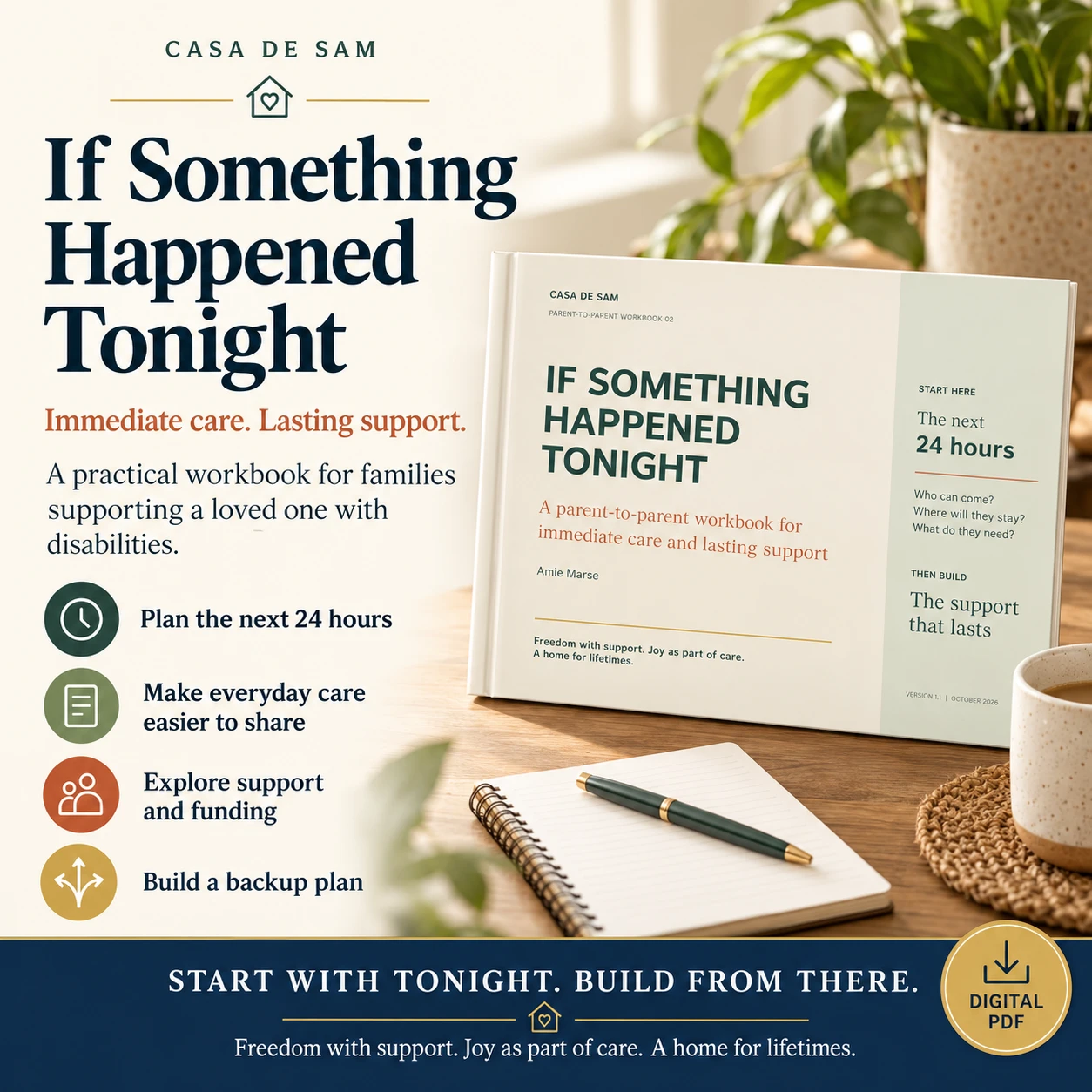
A parent-to-parent workbook for immediate care and lasting support.
If you couldn’t provide care tonight, who would step in? Where would your loved one stay? What would that person need to know?
Start with those practical questions. Then build toward the everyday support, resources, and backup arrangements that could sustain care for longer.
Start with what cannot wait
You don’t need a perfect plan to take a useful step.
This could mean a week when you’re too sick to get out of bed, a hospital stay, or a longer recovery. Your loved one still needs meals, communication, familiar routines, and someone who understands how to help.
01 Protect the next 24 hours
Turn “someone will help” into a real agreement.
Identify who would notice you weren’t available, who has agreed to provide care, where your loved one would stay, and how essential information would reach the right people.
02 Build the support that lasts
Think beyond the first night.
Explore what ordinary life would require, how caring could affect another household, how costs might be covered, and what to revisit if the first arrangement stops working.
Inside the workbook
Explanations, conversations, and room to write.
Each activity has context so you can use the workbook on its own. You don’t need to know Casa de SAM, watch a video, or follow a particular family arrangement.
- An emergency contact map and profile
Make the first calls, agreed roles, immediate needs, and access arrangements easier to find.
- The everyday knowledge in your head
Document communication cues, comforting routines, preferences, relationships, and what helps when things are difficult.
- Actions for this week and this month
Prepare conversations, confirm willingness, arrange introductions, and assign a person and date to each next step.
- A picture of ordinary life
Consider housing, personal support, food, transportation, healthcare, meaningful activities, and caregiver respite.
- A support and funding matrix
Connect each need with a person, a possible source of funding, and a backup plan. Keep unverified resources visible.
- Questions for professionals and future reviews
Identify what needs qualified advice, what could change, and who will help keep the plan current.
Look inside
Practical pages you can return to.
Generous writing space, readable type, and activities designed for different parts of the plan. Select a sample to see the full page.
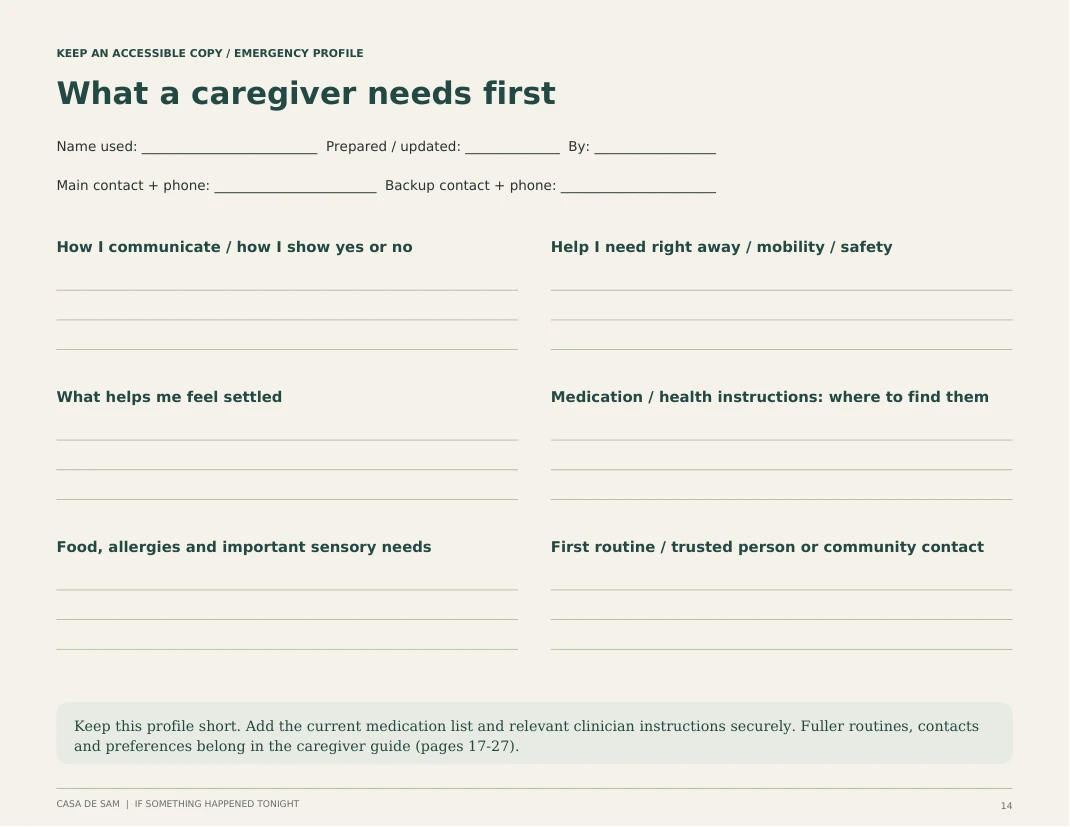
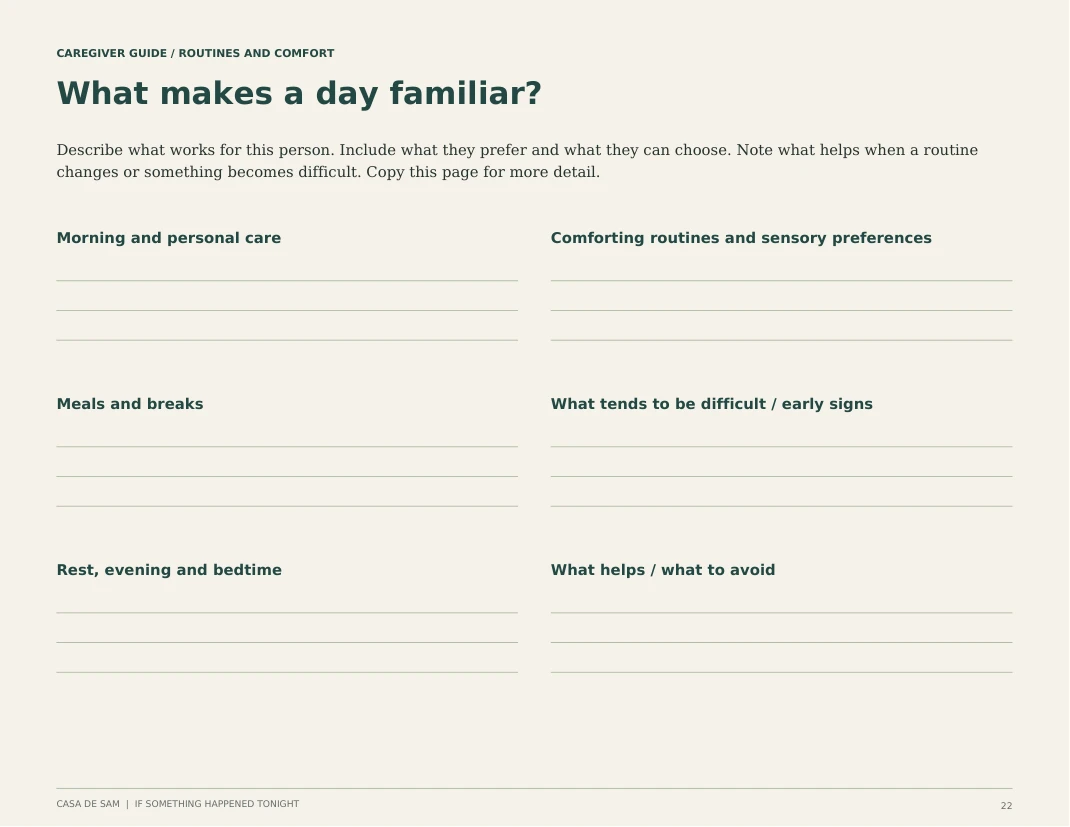
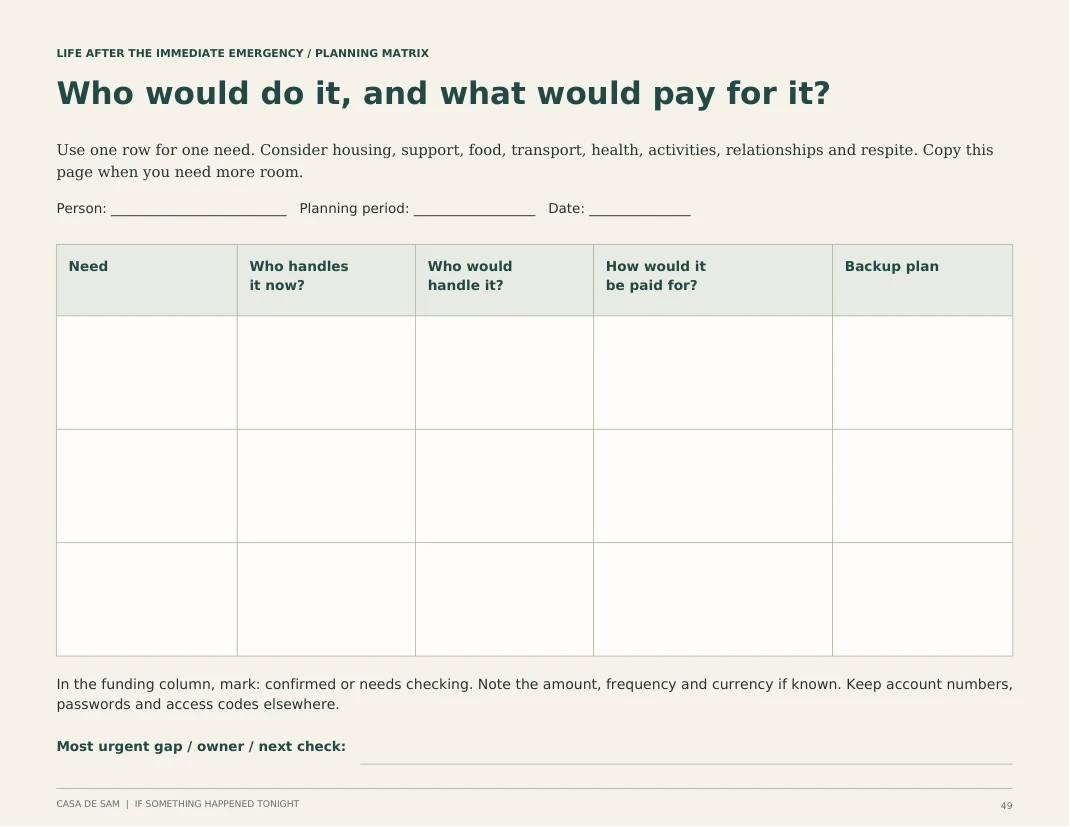
Samples shown in English. The Spanish edition uses natural Paraguayan Spanish and voseo.
A note from Amie
Why I needed a game plan.
I used fertility treatments to conceive Sam. There is no dad in the picture. We spent five years traveling around South America before we settled in Paraguay.
While we were traveling, I had no family nearby and no one to take over if an emergency meant I couldn’t care for him. I had no backup.
The worry that something could happen to Sam because something happened to me is why I created this workbook. I needed a way to move from that question to a practical game plan.
Your plan should fit your loved one’s life.
Sam is not your loved one. Your family, resources, relationships, and options may be different from mine.
Use these pages to find your own answers, with your loved one’s preferences, communication, dignity, and adulthood at the center. Casa de SAM is not presented as the answer for every family.
One workbook, two languages
Start with tonight.
Build from there.
A practical guide for parents, guardians, siblings, and others supporting a child or adult loved one with disabilities.
You can begin with the most urgent gap, leave questions open, and return as your circumstances change.
Review the sample pagesEnglish + Spanish PDFs
If Something Happened Tonight
$4.99 USD · one-time purchase
Plus applicable tax
- 62 pages in each edition
- Landscape format
- Print and write
Includes the English workbook and Si esta noche me pasara algo, the Paraguayan Spanish edition.
Buy both PDF editions · $4.99After payment is confirmed, both PDF editions are delivered together in one email to the address used at checkout.
Secure checkout is provided by Stripe. Your card statement will show Your Scripture Companion, Amie Marse’s personal company. This is a digital product purchase, not a charitable donation.
Before you begin
A few practical questions.
Is this only about what happens after a parent dies?
No. It includes temporary illness, hospital stays, recovery that lasts weeks or months, and longer-term continuity. The first question is what happens when your loved one needs care and you cannot provide it.
What if I don’t have family nearby or an obvious backup?
The workbook doesn’t assume that you do. It helps you identify gaps, prepare specific requests, and list questions for appropriate local services and professionals. It cannot guarantee that a caregiver or service will be available.
Is it for children or adults?
Both. Relevant pages distinguish planning for a minor from planning with an adult. An adult’s own decisions, preferences, communication, and existing arrangements remain part of the plan.
Is this a fillable PDF or a legal document?
It is a printable PDF workbook with space to write, rather than an interactive fillable PDF. It does not appoint a caregiver, establish legal authority, or replace medical, legal, benefits, or financial advice.
Does it explain Paraguayan law or guarantee benefits?
No. The Spanish edition is a language adaptation, not a guide to Paraguayan law. Any U.S. legal or banking examples remain clearly identified as U.S. examples. Questions about your own situation belong with qualified professionals in the relevant location.
How should I handle completed worksheets?
They may contain private care information. Choose who needs access, keep paper and digital copies thoughtfully, and update them together. Do not record passwords, bank account numbers, or access codes in ordinary worksheets.
Educational planning material from one parent to another. Amie is a mom, not a therapist, doctor, lawyer, or financial adviser. A completed workbook is a starting point for conversations and practical arrangements, not a guarantee that care, funding, or legal permissions are in place.