Why Independence Should Not Be the Only Goal for Autistic Adults
Independence can be a valuable goal for many autistic people. It is not the goal my family organizes Sam's life around, and it will not be a condition of belonging at Casa de SAM.
Independence is often treated as the finish line of disability services. Learn the skill. Complete the program. Move out. Work without help. Need less.
For many autistic people, greater independence is both possible and deeply valuable. Skills, communication tools, transportation experience, supported decision-making, education, and the right environment can open doors that were once closed.
This article is not an argument that families should stop teaching skills or that every person with high support needs should live in residential care. There are too many variables for one answer to fit every autistic person. Every family should consider the individual's abilities, preferences, risks, health, communication, access to services, and changing needs.
It is an argument for something narrower: independence is not the only valid measure of adulthood, dignity, safety, happiness, or quality of life. For my family, and therefore for Casa de SAM, independence is not the goal we organize care around.
Research separates conventional milestones from quality of life
Researchers do not use one universal definition of a successful autistic adulthood. Some studies measure what are sometimes called normative outcomes: employment, independent living, friendships, education, or romantic relationships. Other research evaluates broader quality-of-life domains such as physical health, mental health, relationships, neighborhood, stability, and subjective well-being.
In a study of 180 autistic adults, Bishop-Fitzpatrick and colleagues identified groups described as Greater Dependence, Good Physical and Mental Health, and Greater Independence. Their analysis deliberately treated conventional milestones and broader objective quality of life as related but distinct. Greater independence did not function as a complete substitute for measuring health, relationships, or overall life quality. Read the study.
A six-year longitudinal study of 917 autistic adults by Deserno and colleagues likewise distinguished objective psychosocial functioning, based partly on employment and independent living, from subjective well-being. The two were positively related, but they were not identical, and adult outcomes varied widely. Read the longitudinal study.
A different longitudinal study following autistic people from childhood into young adulthood reported that only 5% were living independently and 37% required overnight care. At the same time, subjective quality of life was similar to UK averages in most measured areas, although social relationships were lower. The researchers did not conclude that dependence is automatically good or that independence does not matter. Their findings do show that living arrangement and support level do not, by themselves, tell us whether a person experiences a worthwhile life. Read the study by Simonoff and colleagues.
Disability advocates describe interdependence, not human isolation
Disability-justice advocates have also challenged the idea that human worth should be measured by productivity or complete self-sufficiency. Sins Invalid includes interdependence and recognition of wholeness among its principles of disability justice. Its framework argues that disabled people possess inherent worth outside economic productivity and that communities should acknowledge how people meet one another's needs. Read the principles of disability justice.
Developmental-disability self-advocate Mike Rogers has described interdependence as compatible with self-advocacy, including for people who need direct support to communicate and participate. Read his perspective.
These advocates are not endorsing every decision a parent may make, and they are not saying autonomy is unimportant. Their work supports a more limited point: needing help does not erase personhood, autonomy can exist alongside substantial support, and productivity should not determine human worth.
This is not an argument against growth
Saying that independence should not be the only goal does not mean refusing to teach skills or assuming disabled people cannot learn. It does not mean holding someone in a restrictive setting when they can safely choose a different life.
Casa de SAM's vision protects the right of a resident to leave if a more independent life, or another support arrangement of their choosing, becomes genuinely possible and the resident consistently wants it.
The distinction is between supporting real growth and pretending every person must reach the same destination.
Our earlier article, Can an Autistic Adult Live Independently?, explains why the answer depends on the individual, the environment, and the reliability of available support.
The calculus I made for my own son
When I look at my now nine-year-old son and remember that it took six months of daily practice for him to learn how to shake hands, I have to think honestly about the cost of every goal we pursue. Sam can learn. He has learned many things. But learning some skills requires an enormous amount of repetition, stress, and adult effort.
At some point, I had to ask what all of that effort was for.
For my family, the answer was not to spend years pushing Sam toward a version of independence that might eventually qualify him for a low-wage, highly supervised job such as bagging groceries or cleaning at a movie theater. There is nothing shameful about those jobs. They may be meaningful for someone who enjoys them, and employment may bring another person pride, relationships, routine, money, and greater freedom.
The issue is not that grocery bagging or cleaning work is beneath anyone. The issue is whether years of training, pressure, and stress required to reach that outcome would actually improve this particular person's life.
I did not let go of independence as a goal because I was lazy, hopeless, or unwilling to believe in Sam. I let go of it thoughtfully because I was trying to measure the cost as well as the outcome. For my family, his joy, regulation, safety, relationships, and ability to enjoy his life outweighed the pursuit of a conventional milestone simply because society recognizes it.
Another family may reasonably make a different calculation. Some autistic adults will strongly desire more independence. Some will benefit from years of skill-building. Some will find identity and community through work. There are too many variables for our family's answer to become a rule for everyone.
Independence is not all or nothing
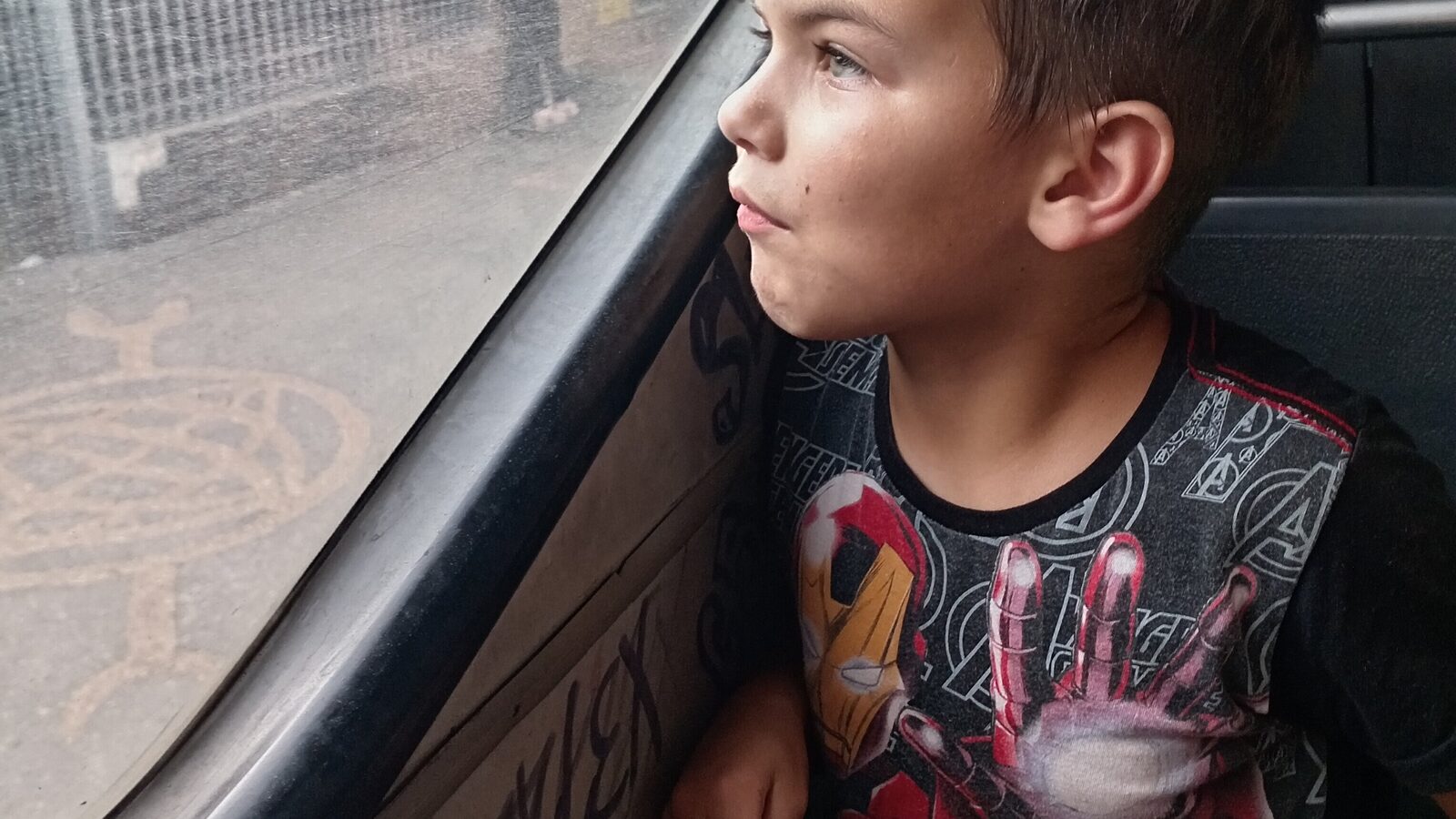
Sam is very comfortable getting onto a colectivo and finding a seat. It is one of the places where he needs the least direction. He understands the flow of boarding, moving through the aisle, choosing a place, and settling by the window.
That ability is real. It deserves to be recognized.
It also does not mean that he can plan a route, recognize every danger, manage money, respond to an emergency, or travel through the city entirely alone. Support needs can be uneven. A person may be remarkably capable in one familiar routine and require lifelong assistance in another.
We should celebrate specific skills without using them to exaggerate what someone can safely manage overall.
We will celebrate every skill that gives a resident more choice or confidence. We will not turn those skills into evidence that they should need less care than they actually do.
Dependence is part of human life
No adult is completely independent. People rely on families, public transportation, doctors, employers, technology, neighbors, laws, caregivers, and social systems. Disability can make that dependence more visible, but it does not make the person less adult or less valuable.
The important question is not whether a person needs help. It is whether the help is respectful, reliable, proportionate, and organized around the person's life.
When independence becomes a moral demand
Independence language can become harmful when support is framed as failure. Families may feel pressured to pursue a living arrangement that is unsafe. Adults may be pushed into work, classes, or social activities they do not understand or want. Programs may celebrate reduced staffing without asking whether the person is actually secure.
A resident who still needs help with bathing, medication, communication, money, transportation, or safety at age thirty is not failing adulthood. A person who cannot work is not failing. A person who communicates without speech is not failing.
Support needs do not reduce human worth.
Choice still matters when full independence is impossible
Rejecting independence as the only goal does not erase choice. Good lifelong support should protect more choices.
A resident may choose between foods, clothing, activities, routes, visitors, music, room colors, religious participation, quiet time, or whether to join a community event. Some choices may be expressed through pictures, gestures, body language, repeated preferences, or refusal rather than speech.
This is one reason supported living works well for some autistic adults: assistance can be organized around the person's own home and decisions. For adults who cannot safely manage that arrangement, a residential community can still protect meaningful choice inside a more continuous model.
A full life can be a supported life
Meaning does not depend on living alone, holding a conventional job, or completing tasks without help. A meaningful adult life may include familiar meals, trusted relationships, favorite places, movement, spiritual life, music, animals, rest, celebrations, and ordinary community participation.
Some residents may enjoy helping in a garden or decorating cookies. Another may prefer to sit nearby. Another may never want to participate. Their place in the home should not depend on productivity.
A peaceful life is not an inferior life.
Support should not become control
There is a real danger on the other side. A lifelong promise must not become lifelong possession.
Staff and guardians should not use disability as an excuse to ignore preferences, prevent safe relationships, impose unnecessary schedules, or refuse every new opportunity. Safety should be based on actual needs and reviewed as abilities, technology, and circumstances change.
The goal is neither abandonment in the name of freedom nor control in the name of protection. It is freedom with quiet support.
Better questions than "Is this person independent?"
- Are they safe without being unnecessarily restricted?
- Are their communication and refusals taken seriously?
- Do the people supporting them know who they are?
- Do they have reliable relationships and a stable home?
- Can they participate in ordinary life in ways that fit them?
- Are they allowed to rest without being treated as unproductive?
- Can support adapt when their health or abilities change?
- Do they belong without having to earn their place?
What you can do this week
Choose one goal and write down its actual purpose
Do not write only the skill. Write what the skill is expected to add to the person's life: safety, communication, enjoyment, choice, belonging, health, income, or freedom.
Estimate the cost as well as the benefit
Record the time, repetition, distress, money, transportation, caregiver energy, and missed opportunities involved. A goal can be technically achievable and still be the wrong priority for a particular person right now.
Ask whether the person enjoys the outcome
Look for communication in whatever form is available. Does the person seek the activity, tolerate it, avoid it, recover slowly afterward, or show pride and comfort? Do not confuse compliance with preference.
Name one skill worth teaching even if it never reduces support
Some skills matter because they create comfort, communication, safety, or choice, not because they make the person less dependent. Identify one of those and give yourself permission to value it.
Long-term questions to consider
- Whose definition of success is guiding the plan?
- Does the person want the proposed outcome, as best you can determine?
- Will the skill meaningfully increase safety, joy, choice, or belonging?
- What is the emotional and practical cost of years of training?
- Could support accomplish the same outcome with less stress?
- Are visible skills being used to minimize less visible support needs?
- How will goals change if health, communication, or cognition changes?
- What would a good life look like if complete independence never arrives?
Casa de SAM's position
Casa de SAM will respect learning, communication, skill development, and greater independence whenever those things are possible, desired, and good for the resident. Residents will retain the right to pursue another living arrangement when they can do so safely and genuinely want it.
But independence will not be a program outcome residents must pursue, and lifelong support will not be treated as failure. We will not require residents to spend their lives proving that they can need less help.
This is not a recommendation for every autistic person or every family. It is a statement of the care philosophy behind Casa de SAM, rooted in the conclusion I reached for my own family.
For my family, and therefore for Casa de SAM, the central goals are joy, safety, communication, meaningful choice, trusted relationships, adult dignity, and lifelong belonging.
Sources and further reading
- Bishop-Fitzpatrick et al. Characterizing Objective Quality of Life and Normative Outcomes in Adults with Autism Spectrum Disorder.
- Deserno et al. Objective and Subjective Psychosocial Outcomes in Adults with Autism Spectrum Disorder.
- Simonoff et al. How Do Autistic People Fare in Adult Life and Can We Predict It From Childhood?
- Sins Invalid. Ten Principles of Disability Justice.
- Mike Rogers. Interdependence: The Role of Support in Self-Advocacy.
About Casa de SAM
Casa de SAM is a developing vision for a lifelong residential community in Paraguay for adults with developmental disabilities who need ongoing support. We believe joyful living is inherently valuable, and our promise is that once a resident is fully accepted, Casa de SAM will care for them for life. The project is currently in its planning and organizational stage, with a long-term goal of opening in 2035. Casa de SAM is not yet a registered nonprofit and is not currently accepting donations.
This article describes one family's decision and the care philosophy of Casa de SAM. It does not claim that independence is an inappropriate goal for every autistic person. Individual abilities, preferences, risks, communication, health, opportunities, and support systems vary widely. Families should make individualized decisions with the disabled person and appropriate professionals whenever possible.