What Does 24-Hour Support Look Like in a Residential Community?
Continuous support should mean someone responsible is available whenever life requires help, not that a resident is interrupted, watched, or programmed every hour.
The phrase 24-hour support can sound more restrictive than it really is. It may bring to mind constant observation, rigid schedules, or a staff member standing beside a resident every minute.
In a good residential community, 24-hour support means something simpler: responsible help is available at every hour because life does not stop when an office closes.
People wake during the night. Medications are given in the evening. Toileting help may be needed before sunrise. A resident may become ill at dinner, anxious after an outing, or unable to sleep at 2:00 a.m. Support has to be organized around real life rather than business hours.
Why around-the-clock access matters
Adults with profound autism are often missing from the research that shapes adult services. In a 2024 study, researchers described profound autism as involving cognitive and language impairments that create a need for access to round-the-clock care. The caregivers interviewed described gaps in services, barriers to care, and the need for supports tailored to this population. Read the study by Ferguson and colleagues.
A European survey of autistic adults, caregivers, and professionals also found that residential preferences varied with independence. Caregivers of adults with lower independence most often preferred full-time residential services, while autistic adults and caregivers of more independent adults more often preferred help in the person's own home. Read the study by Micai and colleagues. The point is not that one answer is superior. The point is that the amount and timing of support must match the actual person.
Another statewide study found high levels of unmet need among autistic adults waiting for Medicaid home- and community-based services, including functional-skills, vocational, and mental-health supports. Read the study by Schott, Nonnemacher, and Shea. Twenty-four-hour housing without access to the services a resident actually needs is not a complete care model.
Presence is not the same as constant intervention
A resident may spend long periods reading, resting, listening to music, walking a familiar route, or enjoying a favorite show without direct assistance. The purpose of continuous support is not to interrupt every quiet moment. It is to ensure that someone capable and responsible is available when help is needed.
The level of direct supervision may change by person, place, and time of day. One resident may need hands-on assistance with nearly every daily task. Another may move comfortably through familiar routines but need someone nearby because they cannot reliably recognize danger or respond to emergencies.
Good support is therefore individualized. It should not force every resident into the same schedule or the same level of observation.
Morning support
Morning support may include waking gently, helping with hygiene and dressing, preparing familiar foods, giving medication, checking for signs of illness, and helping the resident understand what the day will bring.
Some people wake early and move quickly. Others need a slow start with very few demands. For residents who communicate without speech, small changes may carry important information. Refusing breakfast, moving differently, sleeping later, or avoiding a usual activity may be the first sign of pain or illness.
Daytime support
During the day, support may include transportation, medical appointments, shopping, walks, sensory regulation, community activities, family visits, meals, communication help, rest, and participation in meaningful routines.
It should not mean filling every hour with programming. A home is not a school schedule with bedrooms attached. Some residents may enjoy gardening, baking, animals, music, church, or outings. Others may prefer a quiet and repetitive day. Both can be meaningful.
Families comparing models may find the difference between independent living, supported living, and residential care useful. The amount and timing of staff support are among the most important differences.
Evening support and ordinary inclusion
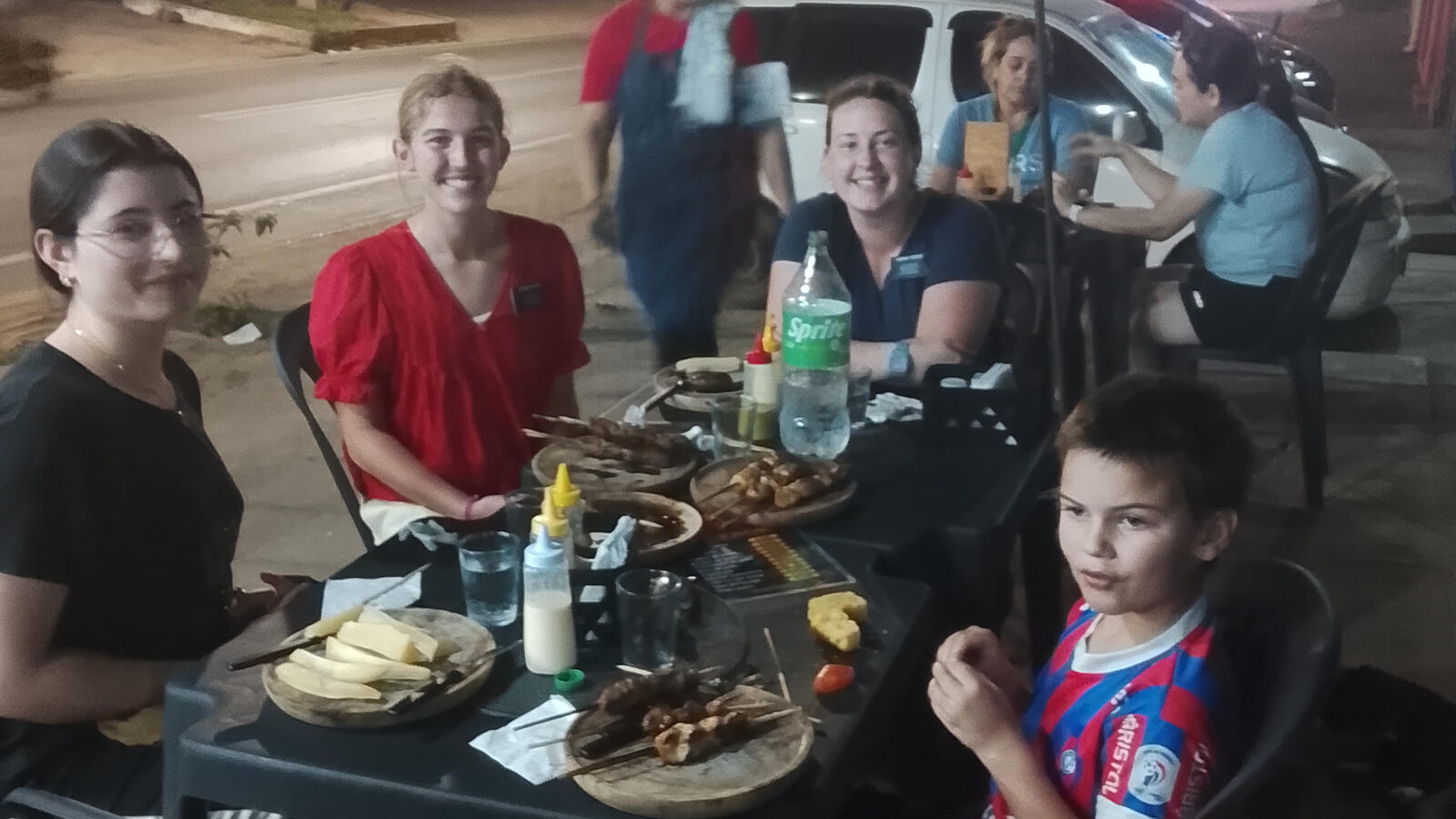
We are members of The Church of Jesus Christ of Latter-day Saints, and we enjoy taking the missionaries out for dinner. Sam is included when the evening makes sense for his flow.
That is the kind of inclusion good support should make possible. It does not require a person to attend every outing, sit through every social event, or perform enjoyment for other people. It means there is enough flexibility, transportation, supervision, and knowledge of the resident to recognize when participation is likely to be good for them.
Evening support may include dinner, bathing, medication, quiet entertainment, spiritual routines when desired, snacks, family contact, and help settling into the night.
Overnight support must be real
Overnight care should not exist only on paper. Families need to know who is awake, who is sleeping on site, who responds to alarms, how quickly backup can arrive, and what happens when more than one resident needs help at the same time.
Depending on the residents, overnight support may include toileting, seizure response, medication, wandering prevention, repositioning, hydration, calming after nightmares, checking medical equipment, or responding when someone is awake and needs reassurance.
Adults do not necessarily need a forced bedtime. Shared homes do need quiet boundaries, protected bedrooms, and a plan for residents who wake or move during the night.
Twenty-four-hour care requires a team
One devoted caregiver cannot safely provide every hour of care forever. Even a live-in house caregiver needs sleep, days off, illness coverage, training, supervision, and backup.
A durable model needs clear roles. That may include a live-in or dedicated house caregiver, scheduled support staff, overnight coverage, nurses or medical consultants, transportation help, relief staff, and leadership available for emergencies.
Staffing also requires documentation. Important knowledge cannot remain only in one caregiver's memory. Communication patterns, medications, allergies, comfort routines, warning signs, family contacts, and emergency plans must be recorded and handed off carefully.
Support includes knowing when not to push
A resident may decline an outing, meal, activity, visitor, or religious gathering through speech, gesture, body language, distress, withdrawal, or repeated patterns. Staff should begin with curiosity rather than assuming defiance.
The person may be tired, in pain, overwhelmed, afraid, grieving, or simply uninterested. Good support protects health and safety while still taking refusal seriously.
This is particularly important for nonverbal autistic adults with high support needs, whose preferences may be easy to overlook when staff focus only on completing a schedule.
Family remains part of the picture
Residential support should not erase family. Parents, siblings, guardians, and long-term loved ones may carry years of knowledge about the resident. They may recognize pain, grief, fear, or joy before a newer caregiver does.
At the same time, the home needs stable authority and household boundaries. Families should be welcomed, heard, and included without informally supervising staff or controlling the shared home.
What families should ask
- Who is present during the day, evening, and overnight?
- Is overnight staff awake, asleep on site, or on call elsewhere?
- How are emergencies handled when several residents need help?
- How are staff absences, illness, and turnover covered?
- How does the home support outings without forcing participation?
- How are refusals and nonverbal communication documented?
- How do families stay involved?
- What happens when a resident's needs increase?
What you can do this week
Track a full 24 hours of support
For one ordinary day and night, write down every reminder, safety check, meal, transportation step, medication task, communication interpretation, personal-care task, emotional-regulation support, and interruption to your own sleep.
Create a nighttime risk list
Record what could happen if your loved one woke while everyone else was asleep. Include wandering, seizures, toileting, food seeking, water use, medical equipment, self-injury, falls, or inability to summon help.
Write a one-page handoff
Imagine that an unfamiliar but qualified caregiver had to take over tomorrow. Write the first page they would need: medication, allergies, communication, safety risks, calming strategies, food, toileting, sleep, and emergency contacts.
Test one small backup plan
Ask one trusted person to take over a familiar routine while you remain available. Notice which instructions were missing and which parts depended on knowledge you had never written down.
Long-term questions to consider
- Would your loved one need awake overnight staff or could sleeping staff respond safely?
- What staffing level would be required during illness or behavioral distress?
- Who provides clinical oversight for medication and medical emergencies?
- How much caregiver turnover can the person tolerate?
- How will the provider preserve familiar routines while staffing changes?
- How are family knowledge and resident privacy balanced?
- What happens if two residents need urgent help simultaneously?
- Can the organization afford and sustain the promised coverage?
Casa de SAM's position
Twenty-four-hour support is not the goal by itself. The goal is a life in which the resident can sleep safely, wake without panic, eat familiar foods, go into the community, rest when needed, maintain relationships, and receive help without waiting for office hours.
Casa de SAM is being designed around continuous but quiet support. The home should be prepared at every hour without making the resident feel watched at every hour.
That is part of what lifelong support actually means: a stable system capable of remaining present through ordinary days, difficult nights, aging, illness, and the eventual loss of family caregivers.
Sources and further reading
- Ferguson et al. Caregiver Perspectives on Service Needs for Adolescents and Adults with Profound Autism.
- Micai et al. Autistic Adult Services Availability, Preferences, and User Experiences.
- Schott, Nonnemacher, and Shea. Service Use and Unmet Needs Among Adults with Autism Awaiting Home- and Community-Based Medicaid Services.
About Casa de SAM
Casa de SAM is a developing vision for a lifelong residential community in Paraguay for adults with developmental disabilities who need ongoing support. We believe joyful living is inherently valuable, and our promise is that once a resident is fully accepted, Casa de SAM will care for them for life. The project is currently in its planning and organizational stage, with a long-term goal of opening in 2035. Casa de SAM is not yet a registered nonprofit and is not currently accepting donations.
This article was written in July 2026 and provides general educational information. Staffing requirements, licensing, funding, medical oversight, and disability-service rules vary by jurisdiction and individual circumstances. Families should verify current requirements with relevant agencies and qualified professionals.